JavaScript is required

Work Archive

Representative projects

Each project is presented through the problem, architecture, key design choices, and current boundaries. The goal is to keep material that can be inspected and discussed, not to list projects mechanically.

Agent Harness / vertical graph app generation

GraphPilot

A vertical Agent Harness for generating complex relationship graph and workflow graph applications.
Online workspace
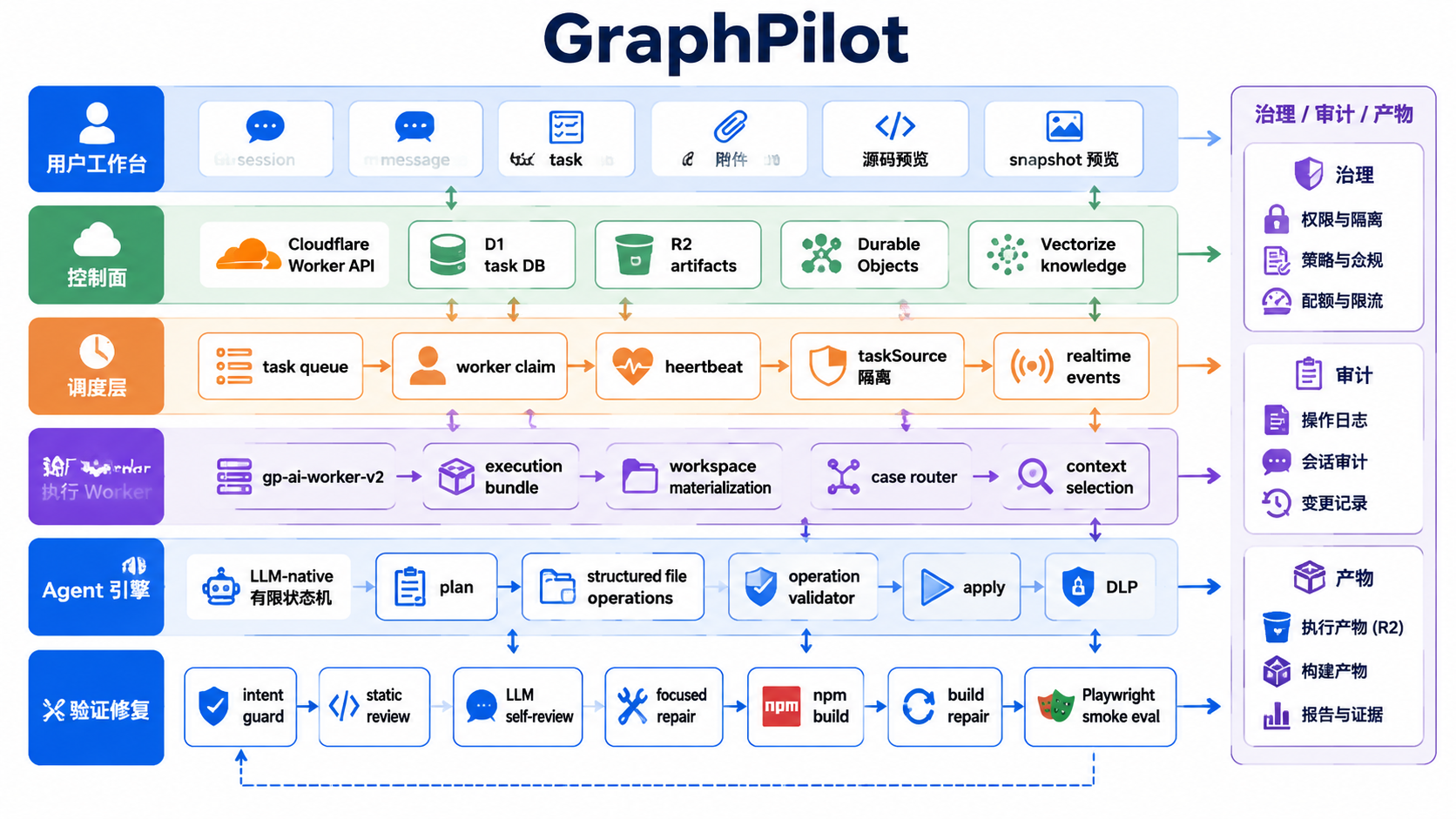
GraphPilot Agent Harness architecture diagram

Key design

  • Explicitly models session, message, task, timeline, artifact, and snapshot.
  • The control plane handles identity, state, scheduling, R2 artifacts, and realtime events; the execution plane handles LLM calls, source edits, builds, and snapshots.
  • The model outputs structured file operations; the worker enforces path allowlists, sensitive file protection, and operation validation.
  • Runtime packs, example catalogs, and knowledge slices guide context selection and reduce API hallucination.
  • Self-review, static review, build repair, replay, and evaluation foundations are preserved.

Current boundary

The current focus is still a controlled single-agent state machine and real-task replay foundation. Automatic training loops and public benchmarks still need more accumulated data.
Open-source component / multi-framework graph foundation

relation-graph

An MIT open-source relationship graph component and graph application foundation for displaying, interacting with, editing, and embedding complex relationship data in browser-based business UIs.

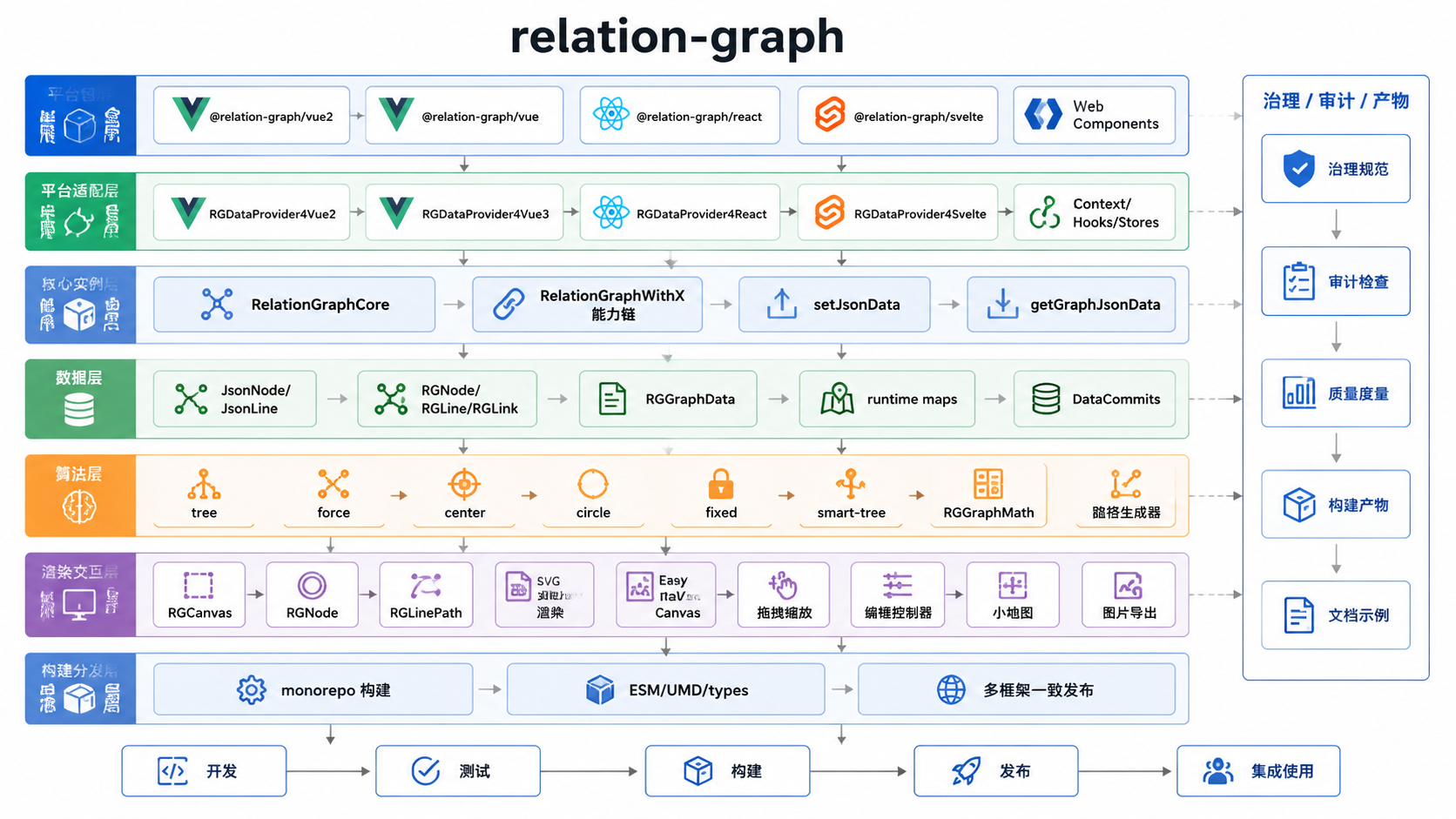
relation-graph architecture diagram

Key design

  • Separates the core engine from platform adapters, exposing graph capabilities consistently to React, Vue, Svelte, and Web Components.
  • Uses JSON-friendly nodes, lines, and data models to connect with backend APIs, configuration files, and AI output.
  • Layout, zooming, dragging, lines, events, editing, minimap, and image export are treated as maintainable capability domains.
  • The website, examples, AI Skill, expert knowledge base, and GraphPilot form a developer asset layer.

Current boundary

The complexity comes from long-term compatibility with multiple frameworks and many business scenarios. Future work should continue strengthening example knowledge assets, type constraints, and verifiable rules for AI-generated graph applications.

Banking domain / AI application construction and orchestration

Hovo

A professional AI application platform for long-running banking workflows with strong data dependency and audit requirements, unifying scenario apps, semantic data, tool calls, workpapers, and runtime governance.

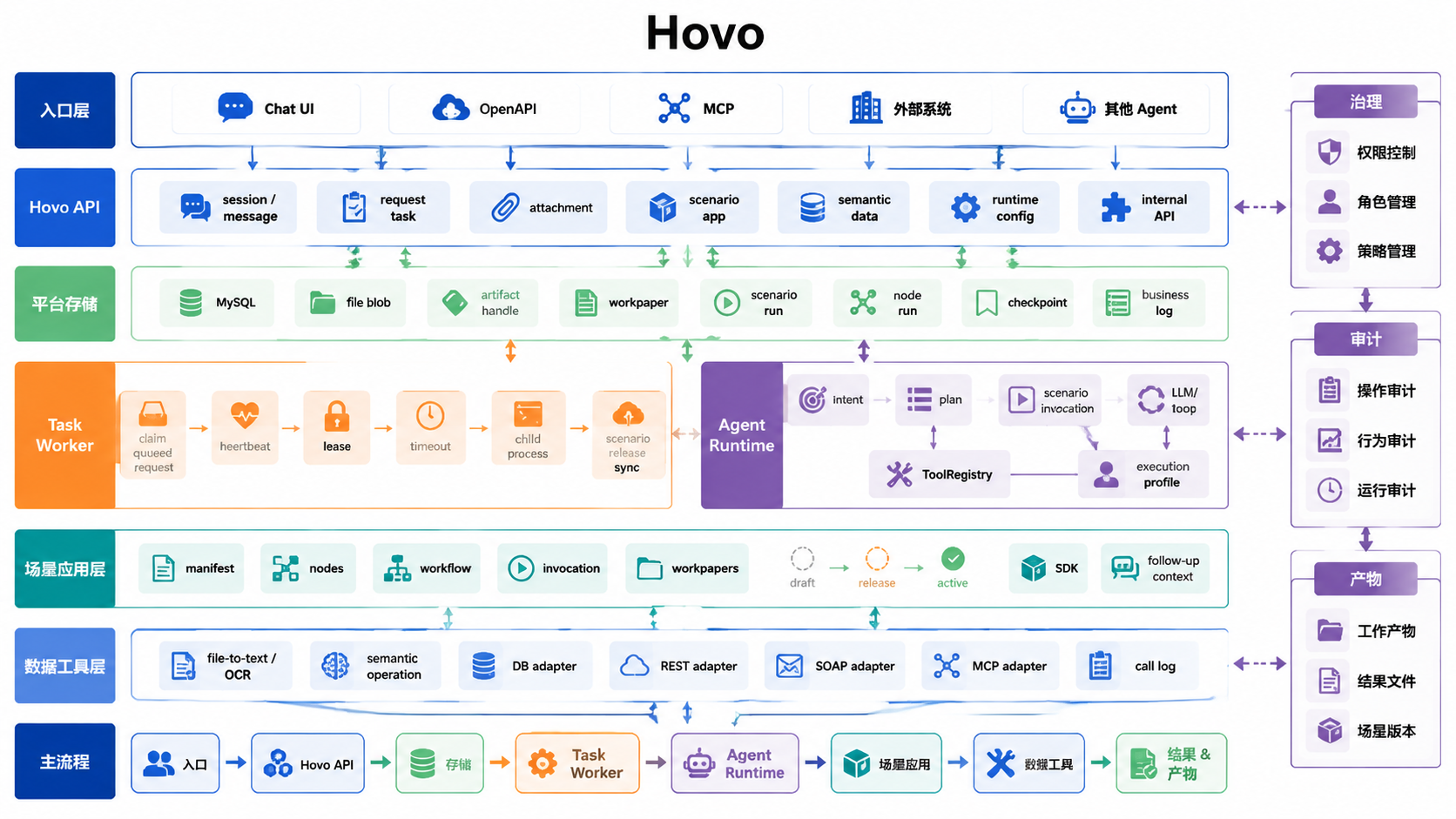
Hovo architecture diagram

Key design

  • Organizes runtime objects through session, request, scenario app, workpaper, artifact, and semantic data.
  • The API layer owns tasks, state, data, and governance; task workers handle asynchronous execution, claim, heartbeat, lease, and timeout.
  • Scenario apps are released as packages containing manifest, nodes, workflow, workpapers, invocation, and runtime parameters.
  • Large objects are stored as artifacts; model context is passed through references and retrieval to avoid context bloat.
  • Runtime logs, business logs, LLM traces, node runs, workpapers, and webhook deliveries are persisted for review.

Current boundary

The platform is currently stronger in professional scenario isolation and horizontal worker scaling. Explicit multi-agent collaboration, public evaluation sets, and automatic self-improvement loops remain future directions.

Knowledge engineering / GraphRAG

GraphRAG

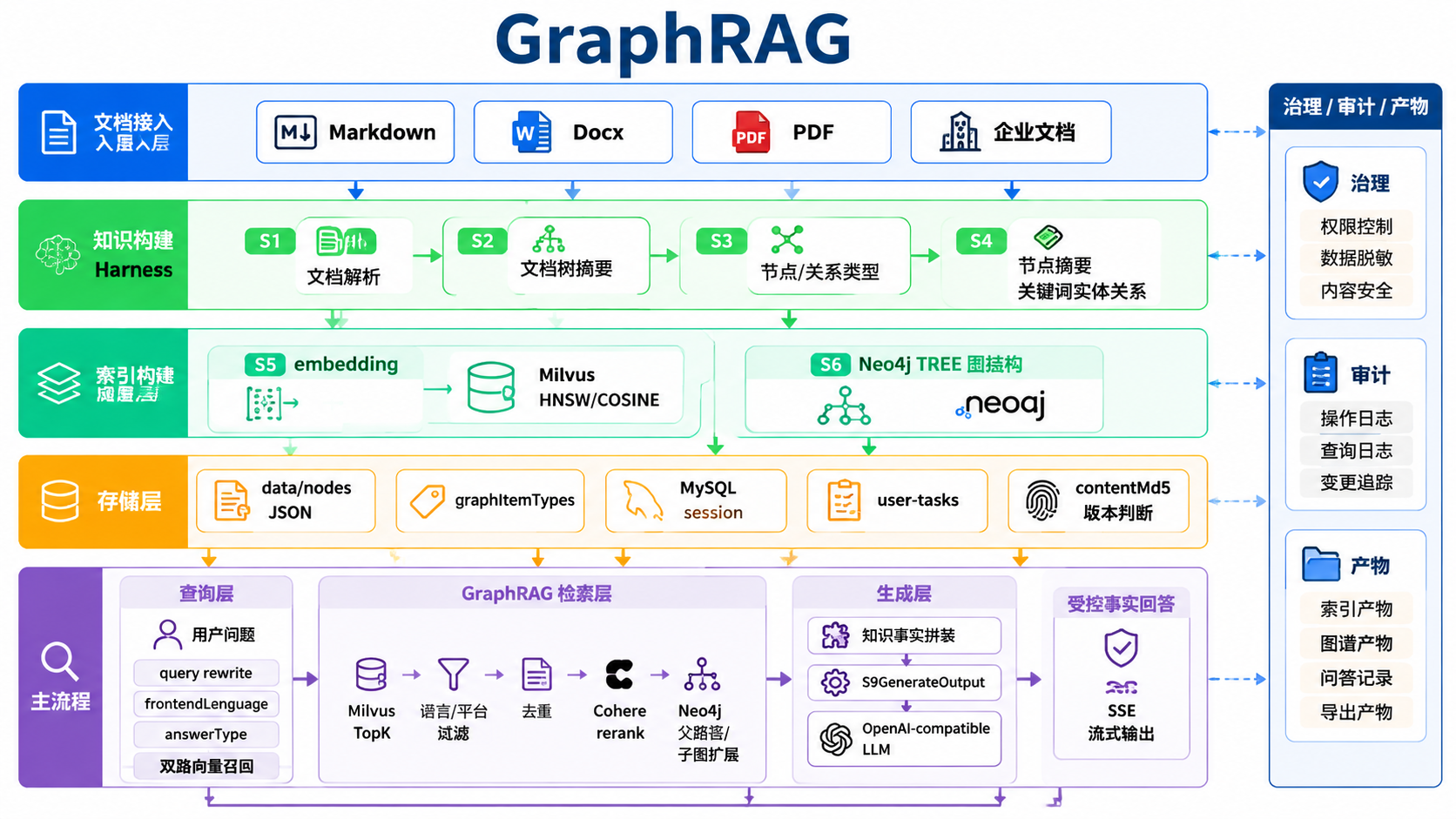
Parses enterprise documents into stable document trees, then uses LLMs to generate summaries, types, keywords, and entity relations, combining vector recall, graph expansion, and fact-constrained generation.

GraphRAG architecture diagram

Key design

  • Markdown, Docx, PDF, and other documents are first parsed into stable document trees.
  • LLMs generate node summaries, categories, keywords, and entity relation extraction results.
  • Milvus provides semantic recall; Neo4j stores hierarchy and supports context expansion.
  • Query rewrite, dual-path recall, rerank, and fact-constrained answers work together to reduce hallucination risk.
  • Recall, context, and answer audit data are retained for debugging.

Current boundary

The sample knowledge base can already validate document structure, graph expansion, and hybrid retrieval. Multi-tenant configuration, incremental indexing governance, and evaluation still need more work.

AI data analysis / banking insight

Guanlan

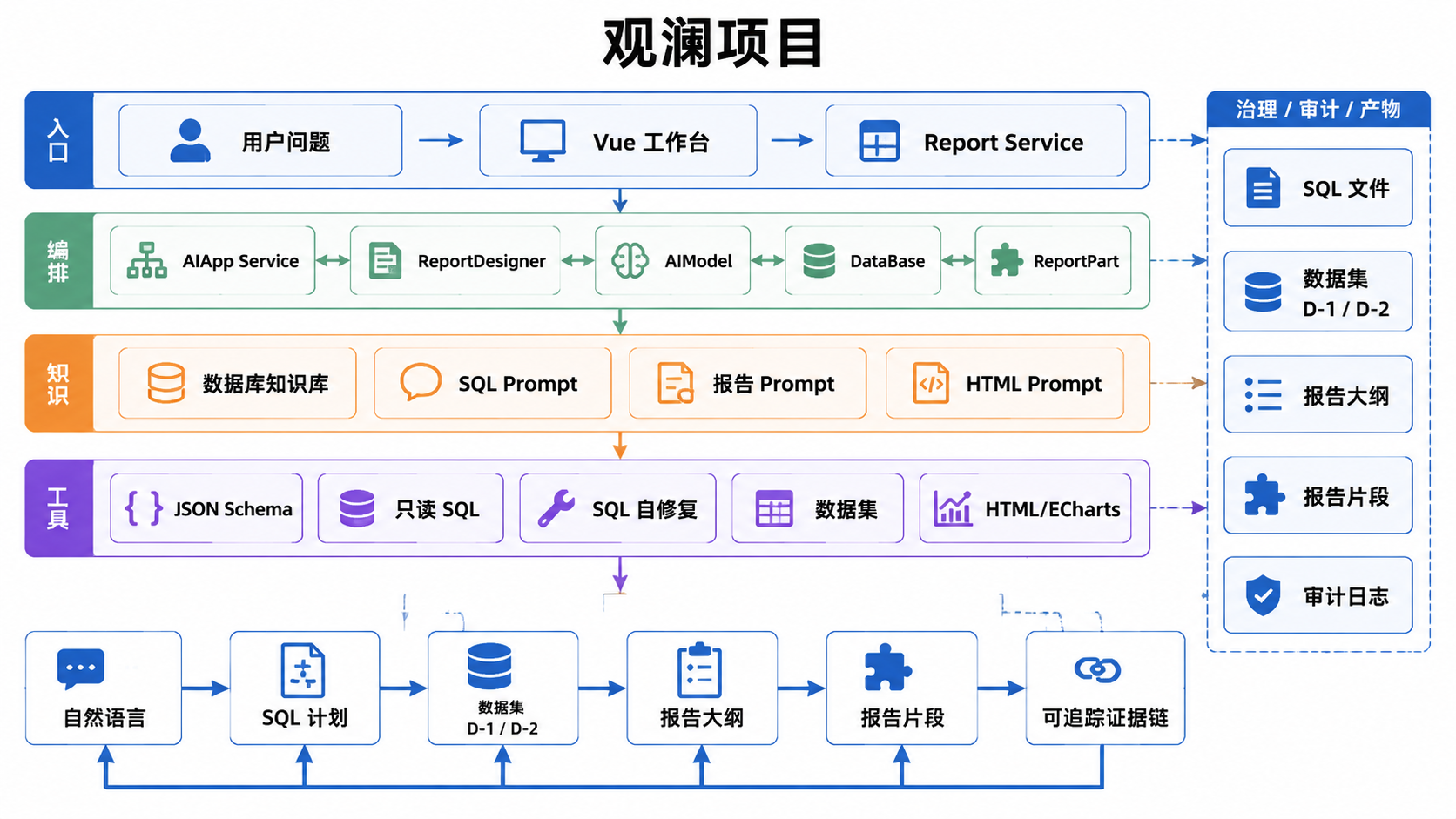
An AI data analysis system for banking operation analysis, customer profiling, marketing insight, and graph visualization. It turns natural-language questions into constrained SQL, structured report design, and interactive report fragments.

Guanlan architecture diagram

Key design

  • Splits natural-language analysis into SQL planning, read-only querying, report outline generation, and HTML report fragments.
  • Model output must match JSON Schema; SQL execution is limited to read-only queries.
  • SQL failures trigger local repair based on database knowledge and error messages, rather than unrestricted rewriting.
  • Report fragments can use ECharts and relation-graph to show data structures and business relationships.
  • Datasets, SQL, and report fragments preserve an evidence chain for review.

Current boundary

These systems depend heavily on database metadata quality, field semantics, and governed business definitions. Model output is a candidate plan; final results still require system validation and business review.

Local quantitative research / minute-level replay

Local A-share quantitative research

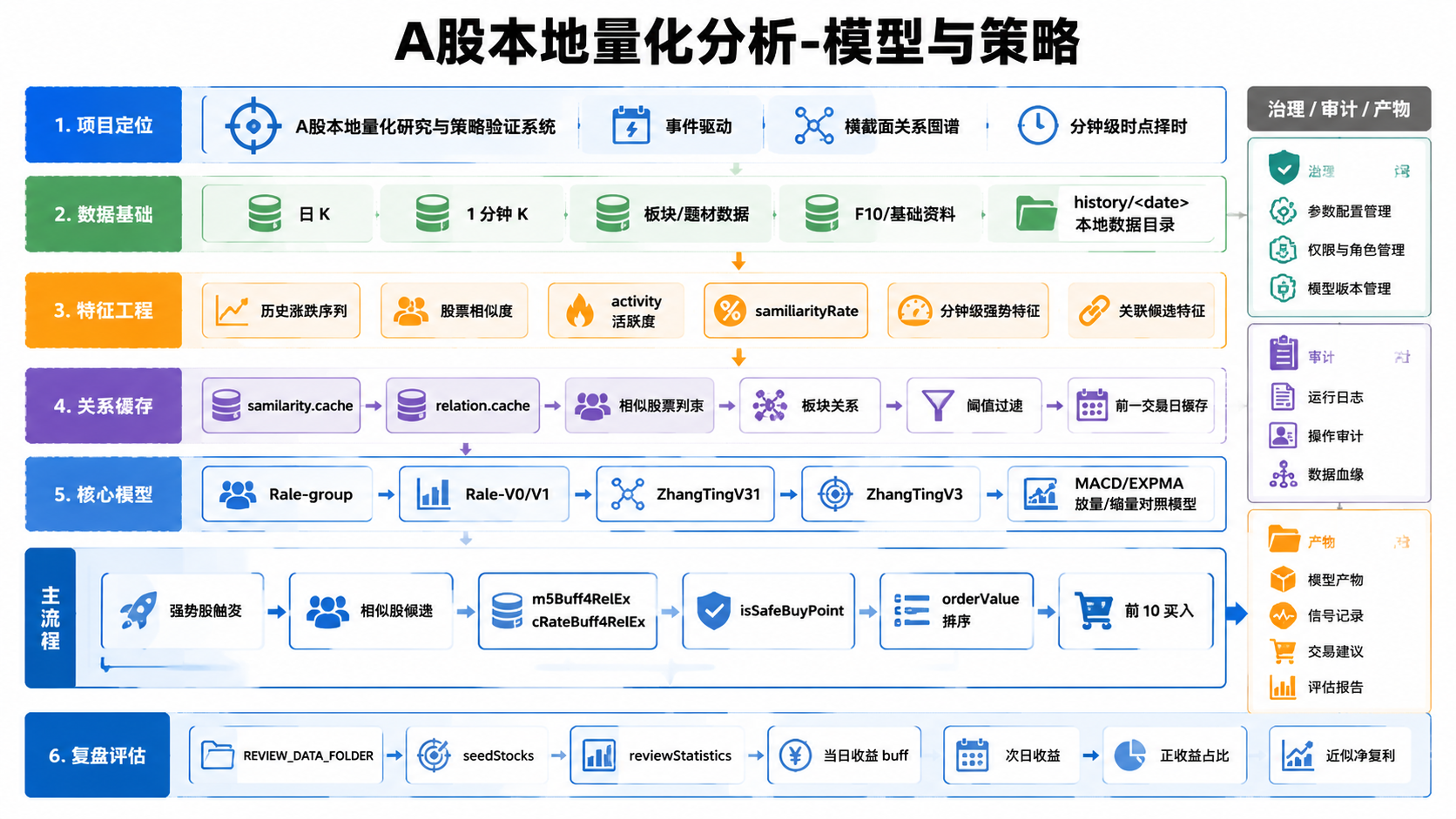
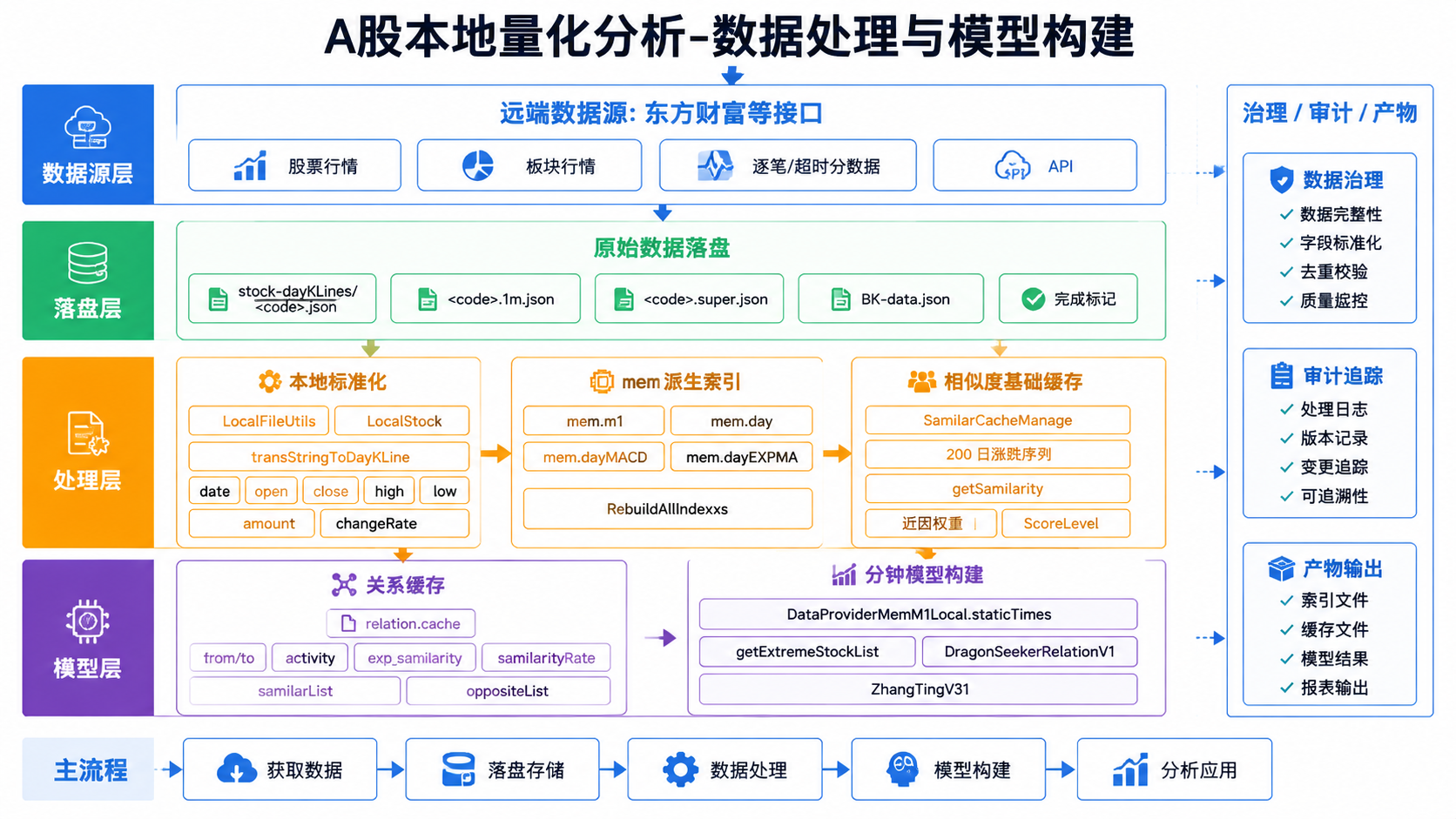
A local research, relationship modeling, and replay system for the A-share market, focusing on data processing, similarity relations, trigger strategies, return statistics, and reproducible research workflows.

A-share local quantitative research model and strategy architecture
A-share local quantitative research data processing and model construction diagram

Key design

  • Processes daily K-line, one-minute K-line, sector data, and derived indexes locally to reduce online dependency.
  • Uses stock similarity, relation cache, strong-stock triggers, and lagging similar-stock candidates to produce replay objects.
  • Ranks by orderValue and records same-day return, next-day return, positive-return ratio, and approximate compound net return.
  • Replay results remain traceable by date and strategy version.

Current boundary

This page only presents the research system and replay method. Any return-related content should be read as backtest statistics, not live trading performance or investment advice.